7BitCasino KYC and verification: documents and withdrawal checks
 Available in AU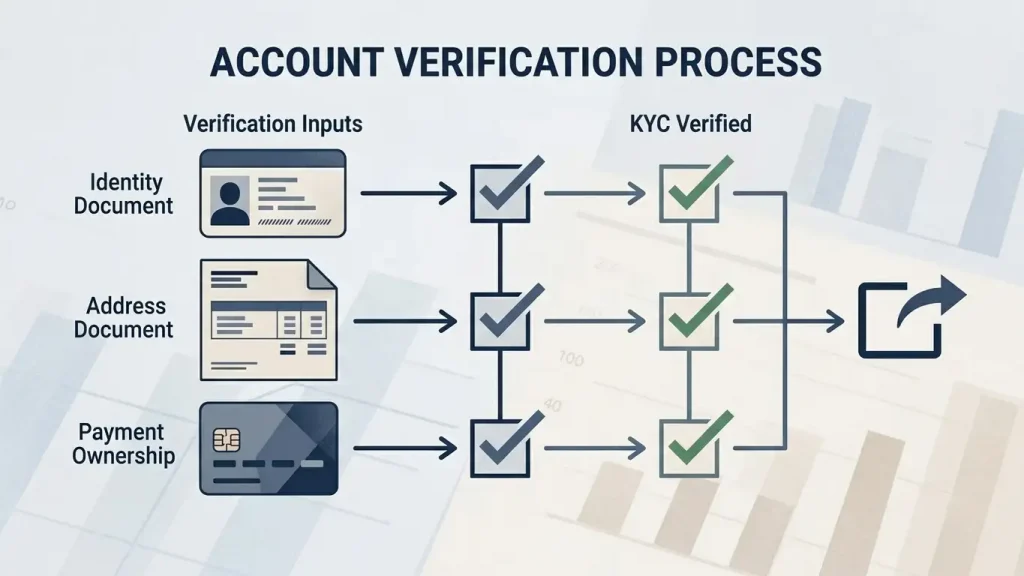
KYC and verification
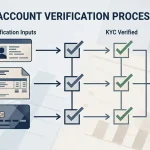
7BitCasino can request KYC before a payment is released. Its current terms describe identity verification as a control used to confirm that the account holder is a real person, that deposited funds belong to that person, and that released funds reach the correct payment account. The terms list government-issued identity evidence and proof of address as typical documentation, while also reserving the right to ask for additional material.
The important distinction is between typical requirements and guaranteed requirements. Not every account is asked for the same documents at the same time, and a published review target is not a promise of completion. The current FAQ says documents uploaded through the verification area are aimed to be reviewed within 24 hours. Treat that as an operational target, not a fixed approval deadline.
Table of Contents
- When 7BitCasino can ask for KYC
- The trigger-document-time framework
- Typical proof of identity
- Typical proof of address
- Payment ownership can be part of verification
- Additional documents and video verification
- How to submit documents and follow status
- What the 24-hour target actually means
- Why KYC can hold a withdrawal
- Duplicate accounts and inconsistent details increase friction
- KYC is an operational trust signal, not Australian protection
- How KYC can change the timing of a 7BitCasino withdrawal
- Recommend
When 7BitCasino can ask for KYC
The current FAQ says verification is not automatically required for every deposit or withdrawal, but adds that in certain circumstances the casino may ask a player to complete verification before any payment is made. That wording matters because it rules out two common assumptions: that every player is verified at registration, or that a successful deposit proves no later checks will occur.
The terms go further by describing KYC as part of the casino’s payment and anti-fraud controls. In practice, verification is most relevant when the operator needs to connect the person using the account with the identity data, source payment route and destination of funds. A withdrawal is therefore a natural point for checks to surface even if the account previously operated without document requests.
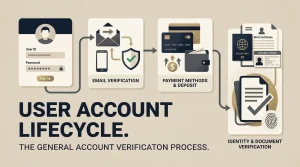
For a broader view of the account lifecycle, see the 7BitCasino registration. The key point here is that KYC is not a separate feature bolted onto the account at the end. It can become part of the payment decision.
The trigger-document-time framework
A useful way to understand 7BitCasino verification is to separate three questions: what triggered the check, what evidence is being requested, and how long the review is actually taking. Mixing those questions together makes KYC look more predictable than it is.
| Question | What the current material supports | What not to assume |
|---|---|---|
| Trigger | KYC can be requested before a payment and in other circumstances where the operator requires verification. | Do not assume every player is checked at the same stage. |
| Documents | Typical categories include identity, address and payment evidence, with extra documents possible. | Do not treat the list as exhaustive. |
| Timing | The FAQ says the casino aims to review uploaded documents within 24 hours. | Do not treat 24 hours as a guaranteed completion time. |
This framework is more useful than a one-line promise such as “verification takes one day”. A review can depend on the quality of the upload, whether the data matches the account, whether payment ownership needs separate proof, and whether an additional request is made after the first submission.
Typical proof of identity
The current terms list government-issued identification as the typical identity evidence. They say the document should contain the holder’s full name, date of birth, issue and expiry information, and a photograph. Examples given in the terms include a passport, identity card and driving licence.
That does not mean those examples are the only possible documents or that every one will be accepted in every circumstance. The terms expressly reserve the right to request additional documentation. The practical lesson is to follow the live verification request shown in the account rather than preparing a fixed checklist from memory.
Identity evidence is also only one side of the check. A document can prove who a person is without proving where they live or whether they own the payment method connected to the account.
Typical proof of address
For address evidence, the terms describe documentation that confirms the place of residence entered during registration and shows the player’s full name and residential address. They state that proof of residence should be no older than 90 days, with examples such as a utility bill, bank statement or insurance document.
This is one of the points where accuracy of the original account data becomes important. If the address in the profile does not match the evidence being submitted, the casino may need clarification or updated information before the account can be treated as verified.
Because document requirements are high-risk and can change, use the account’s current verification instructions as the operational source. A guide can explain the typical categories, but the live request controls what must actually be submitted.
Payment ownership can be part of verification
The terms also describe proof of payment as a possible KYC category. In principle, that evidence should show that money was sent to the casino and can include the amount, the payment account holder and the payment date. The exact form can vary because card, wallet and crypto payment methods do not produce identical records.
This is why using someone else’s payment method can create more than a cashier inconvenience. The terms prohibit third-party payment systems and connect payment ownership to the casino’s security controls. If the person named on the casino account does not line up with the owner of the funding or payout route, additional checks can follow.
Before withdrawing, compare the account profile with the payment path you used. The 7BitCasino withdrawals covers the payout process in more detail, while this page focuses on the identity and ownership checks that can interrupt it.
Additional documents and video verification
The current terms make clear that the listed document categories are typical rather than exhaustive. They reserve the right to request further information and also allow the casino to request a video call as part of KYC at its discretion.
That is an important limit on any static document list. A player who has already submitted an identity document and address evidence can still receive another request if the operator decides that more information is needed. Expired identification, a change of residence or payment ownership questions are examples of circumstances the terms address.
For that reason, the useful response to a new request is not to assume the first checklist was wrong. It is to read the new request carefully, confirm that it relates to the account, and provide only the material requested through the official verification channel.
How to submit documents and follow status
The FAQ says documents can be uploaded after login through the account’s verification area. It currently lists PDF, PNG and JPG as accepted formats and states that uploaded files should be below the stated size limit shown in the FAQ. The same area is described as the place where document status and additional information can be viewed.
Use a clear, complete image or file. Cropped edges, unreadable text, glare and mismatched account details can create avoidable back-and-forth. Where a payment image is requested, make sure it shows the relevant ownership and transaction information without exposing unrelated sensitive data.
If the status does not change as expected, support is the appropriate escalation route. 7BitCasino lists 24/7 English live chat in its current support material, but support availability does not turn the verification target into a guaranteed decision time.
What the 24-hour target actually means
The FAQ says that when documents are submitted through the website’s upload facility, the casino will aim to review them within 24 hours and then notify the player. The word “aim” is important. It describes a target for review, not a contractual promise that every verification case will be approved or completed inside one day.
A review can result in approval, a request for clearer evidence, or a request for another document. Those outcomes affect total completion time even when the first review happens quickly. The most accurate expectation is therefore that 24 hours is the stated target for reviewing uploaded documents, while end-to-end KYC time can vary by case.
Do not plan a time-critical withdrawal around a guaranteed one-day KYC window. If funds are needed by a particular date, leave room for verification and payment processing as separate stages.
Why KYC can hold a withdrawal
The terms state that failing to provide requested KYC documentation prevents a player from receiving payments from the casino. They also say account actions can be restricted until verification is complete. This makes KYC a genuine payment gate rather than a cosmetic account badge.
There is a practical difference between withdrawal processing and verification processing. A withdrawal request can be otherwise valid but still remain unreleased while identity or ownership evidence is outstanding. If a player sees a delay, the first question is whether the withdrawal itself is being processed or whether the account has moved into a separate verification step.
That distinction helps avoid chasing the wrong issue. Payment method timing belongs in the withdrawal guide, while document acceptance belongs here.
Duplicate accounts and inconsistent details increase friction
The terms permit only one account per player and contain anti-fraud provisions covering deliberately incorrect registration data, forged or modified documents and multiple-account behaviour. KYC gives the operator a point at which those account records can be compared.
If you have forgotten login details, recover the existing account rather than creating another one. If your address or other information has genuinely changed, update the account through the supported process rather than submitting documents that contradict the profile without explanation.
This is not about predicting that a mismatch will automatically lead to closure. It is about reducing avoidable inconsistencies that can turn a routine document review into a longer account investigation.
KYC is an operational trust signal, not Australian protection
Identity and payment checks show that the operator has controls around account ownership and payouts. They can be relevant when evaluating how the site manages fraud risk, but they should not be confused with Australian licensing or consumer protection.
7BitCasino’s licence and the Australian regulatory position are separate questions. For that evidence hierarchy, see the 7BitCasino trust and safety. A KYC procedure can exist on an offshore site without making that site licensed to provide online casino services in Australia.
How KYC can change the timing of a 7BitCasino withdrawal
A 7BitCasino withdrawal can move from a payment task into a verification task when the operator requests identity, address or payment evidence. Once that happens, the withdrawal timeline depends not only on the payment method but also on how quickly the requested material is submitted, reviewed and accepted.
The current 24-hour wording is best read as a target for document review, not a guaranteed payout deadline. Preparing consistent account details and using payment methods you control can reduce avoidable friction, but no static guide can guarantee which documents will be requested in an individual case.
The practical rule is simple: treat KYC as a possible part of the withdrawal process from the start, not as an unexpected exception after funds are requested.
For the wider product and regulatory picture, see the 7BitCasino Australia overview.
Recommend

Is 7BitCasino safe? Licence, regulation and trust signals for Australia
Trust, licence and regulation 7BitCasino is operated by Scores55 Tech B.V. and its current terms...
7BitCasino registration and account guide for Australian readers
Account and registration A 7BitCasino account is best understood as an account lifecycle rather than...

7BitCasino bonuses for Australian readers: offers, conditions and checks
Bonuses and promotions The current 7BitCasino promotions page advertises a four-deposit welcome package worth 325%...

7BitCasino games: slots, live tables and provider depth
Games and software providers 7BitCasino offers slots, table games and live casino content, and the...

7BitCasino payments in AUD: cards, e-wallets and crypto
Payments and account currency 7BitCasino supports AUD as an account currency, and its documented payment...

7BitCasino mobile: browser access and what the app claim really means
Mobile access 7BitCasino can be used on a mobile device through a browser, and the...